DiTing: A large-scale Chinese seismic benchmark dataset for artificial intelligence in seismology
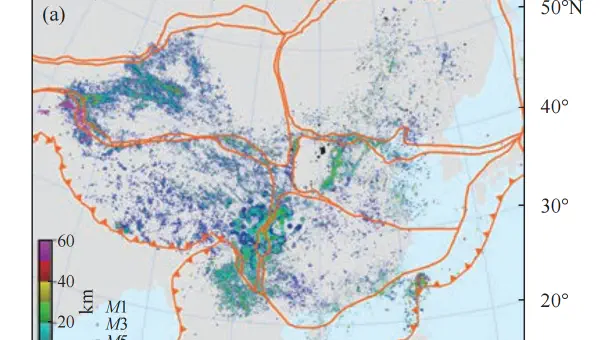
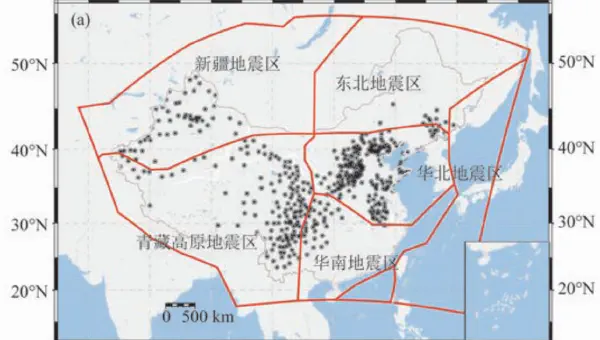
In recent years, artificial intelligence technology has exhibited great potential in seismic signal recognition, setting off a new wave of research. Vast amounts of high-quality labeled data are required to develop and apply artificial intelligence in seismology research. In this study, based on the 2013–2020 seismic cataloging reports of the China Earthquake Networks Center, we constructed an artificial intelligence seismological training dataset (“DiTing”) with the largest known total time length. Data were recorded using broadband and short-period seismometers. The obtained dataset included 2,734,748 three-component waveform traces from 787,010 regional seismic events, the corresponding P- and S-phase arrival time labels, and 641,025 P-wave first-motion polarity labels. All waveforms were sampled at 50 Hz and cut to a time length of 180 s starting from a random number of seconds before the occurrence of an earthquake. Each three-component waveform contained a considerable amount of descriptive information, such as the epicentral distance, back azimuth, and signal-to-noise ratios. The magnitudes of seismic events, epicentral distance, signal-to-noise ratio of P-wave data, and signal-to-noise ratio of S-wave data ranged from 0 to 7.7, 0 to 330 km, –0.05 to 5.31 dB, and –0.05 to 4.73 dB, respectively. The dataset compiled in this study can serve as a high-quality benchmark for machine learning model development and data-driven seismological research on earthquake detection, seismic phase picking, first-motion polarity determination, earthquake magnitude prediction, early warning systems, and strong ground-motion prediction. Such research will further promote the development and application of artificial intelligence in seismology.
Ming Zhao, Zhuowei Xiao, Shi Chen and Lihua Fang